Melanie Harris (2022 Alumna) - Head of Indigenous Engagement and Export, Austrade

Reimagining Trade: Indigenous Exports and the Asian Opportunity
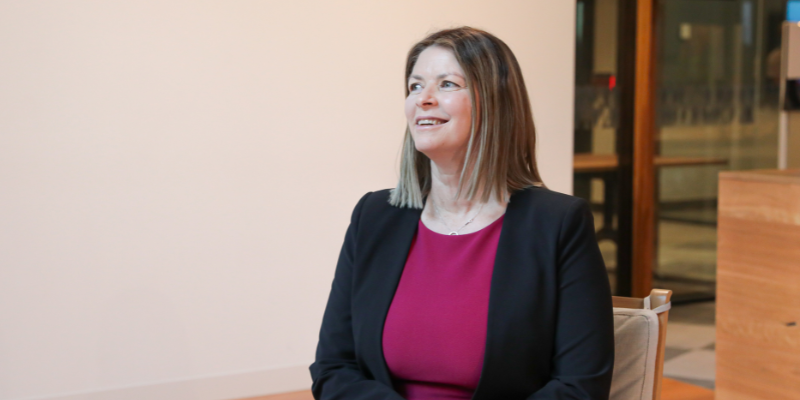
In January 2025, Melanie Harris took on a new and unprecedented role: Austrade’s first Head of Indigenous Engagement and Export. It was a natural fit. Harris is a proud Aboriginal woman from Yuin country, whose professional experience has bridged the realms of trade, capability development and cultural diplomacy.
Previously Australia’s Trade Commissioner for Malaysia and Brunei, Harris is energised by the potential she sees for creating market opportunities for Indigenous Australian exporters.
“Austrade redefined our approach to supporting Indigenous exporters and created the role especially. It’s perfect for me given my experience and passion for Indigenous business,” says Harris. “Being Indigenous myself also helps as my role is very much about building the capability of Indigenous businesses, as well as building the capability of Austrade to support those businesses into export markets.”
Harris describes the Indigenous export sector as a ‘sleeping giant’ whose potential has been under-estimated despite the long history of First Nations trading across the Asia region, which is now primed for growth.
“There are a lot of great businesses out there that are innovative and great exporters, and they just happen to be Indigenous-owned,” she says.
Part of her role is to help those businesses build the commercial and cultural capabilities they need to tap into growing export markets, of which Asia is a priority. Harris’ appointment is timely as the Australian government sharpens its strategic and economic focus on Southeast Asia. In 2025, she embarked on a national roadshow, Exploring Overseas Markets, targeting Indigenous entrepreneurs, helping them to build their Asia capabilities and build their awareness of Southeast Asian market opportunities.
Market-to-market and People-to-people Opportunities in Asia
Harris advocates deeper engagement not just between governments and businesses, but also between cultures. In particular, she wants to see Indigenous Australians build closer people-to-people links throughout the region.
Asia, she believes, offers both opportunity and alignment. “It’s not necessarily about the Indigenous component,” she explains. “For example, we have some great Indigenous businesses in the tech space. What resonates in Southeast Asia is the cultural aspect; it’s about the message behind why they’re doing things the way they do. Indigenous businesses often come at something with a different view, for example, protecting the earth, protecting culture and protecting family.”
This message, she says, “resonated well” in Malaysia, where there is a similar emphasis on cultural preservation and environmental stewardship. “Malaysian people want to protect their cultures and their physical country, but also the economy, their people and their languages. So that does resonate.”
Resonance in the Region
Asia is more than just a market, believes Harris. It’s a mirror reflecting back values shared by many Indigenous Australians. For her, and many of the Indigenous entrepreneurs she has worked with, the sense of familiarity in parts of Asia has been striking. “The first place I went to in Asia was Malaysia in 2017. It was for a work trip for four days and I really loved it. I felt very comfortable and thought, ‘I can live somewhere like this.’ I just felt at home instantly as soon as I got out of the airport.”
By 2021, she had formalised that connection, taking up the post of Trade Commissioner. Over the following three years, she became an unexpected bridge between Indigenous businesses and Southeast Asian markets. It was an experience that would reshape both her career and her sense of cultural belonging.
During her posting, she hosted numerous Indigenous Australians on trade visits. “I reckon I had about 30 Indigenous people come to Malaysia within a few years. I would say, 98% of them said they too felt it was like being at home, it wasn’t so foreign to us.”
Asked why, Harris offers several reflections. “Malaysia is a very welcoming country. Malaysians celebrate everything, and so if you have something different, they want to know about it, and they want to celebrate that too.” She also notes that everyday language offers familiar cues. “In Indigenous culture we call people ‘auntie’ and ‘uncle’ as a sign of respect for our elders.
That’s very similar across Asia. In my first week of arriving in Malaysia I was out having lunch with some colleagues, and they mentioned ‘Oh, check out the aunties’ and I knew straight away without them having to explain that they were referring to the older ladies two tables over, not their relatives. I explained that [in Indigenous culture] we have aunties like that too.”
Rethinking Global Mindsets
Harris’ workplace project as part of the Asialink Leaders Program focused on building Asia capability among Indigenous people. But she soon discovered that “Australia needed to build its Indigenous capability first.”
According to Harris, the gap often lies in perceptions, both of Asia and Indigenous businesses themselves. “People tell me all the time that Indigenous businesses aren’t ready to export, that they’re not capable or don’t have the capacity. I tell them, ‘You can’t say that about a whole business sector.’”
What’s needed, she says, is “getting people to be more confident.” “I think people can be Asia capable, we all inherently have it. But the Asialink Leaders Program helps you realise ‘I’m actually better at this than I thought’ or ‘Here are the gaps I can fix’. It’s like doing personal training, and your Asia capability is just getting fitter. I see the same thing with Indigenous capability, that’s where they intersect,” she says.
From Laksa to Leadership
Harris is candid about her journey. “Thirty years ago, the most Asian thing I was doing was probably having laksa at Dickson Noodle House. That’s how ‘non-Asia’ I was. I’m proud of how far I’ve come since then.”
Harris has built connections across the region and seen her own confidence in developing a nuanced understanding of Asian cultures grow. “Funnily enough, I’ve come full circle and I’m getting to do my workplace project and really implementing it in my current role,” she says.
Looking back, Harris reflects on how different her experience might have been if she’d discovered Asia earlier. “If you’d asked 20-year-old me where I was heading, I would have said the US or the UK or New Zealand… We think they’re similar to us because they’re English-speaking countries. But there are more similarities with Asia that we’re missing, [compared to] some of those other countries.”
These similarities, she says, matter more now than ever. She believes that Southeast Asia offers Australia enormous economic, social and cultural opportunities. “We’re neighbours with similar time zones and can get there so quickly,” she notes. The only thing that has been missing is the mindset.
“If I had my time again... I would have gone earlier. It’s just a great experience being in Asia... not just from a business perspective but from a personal perspective.”
Melanie Harris is Austrade’s inaugural Head of Indigenous Engagement and Export. She served as Australia’s Trade Commissioner for Malaysia and Brunei between 2021-2024 and now champions Indigenous business exports globally. Melanie participated in the Asialink Leaders Program in 2022